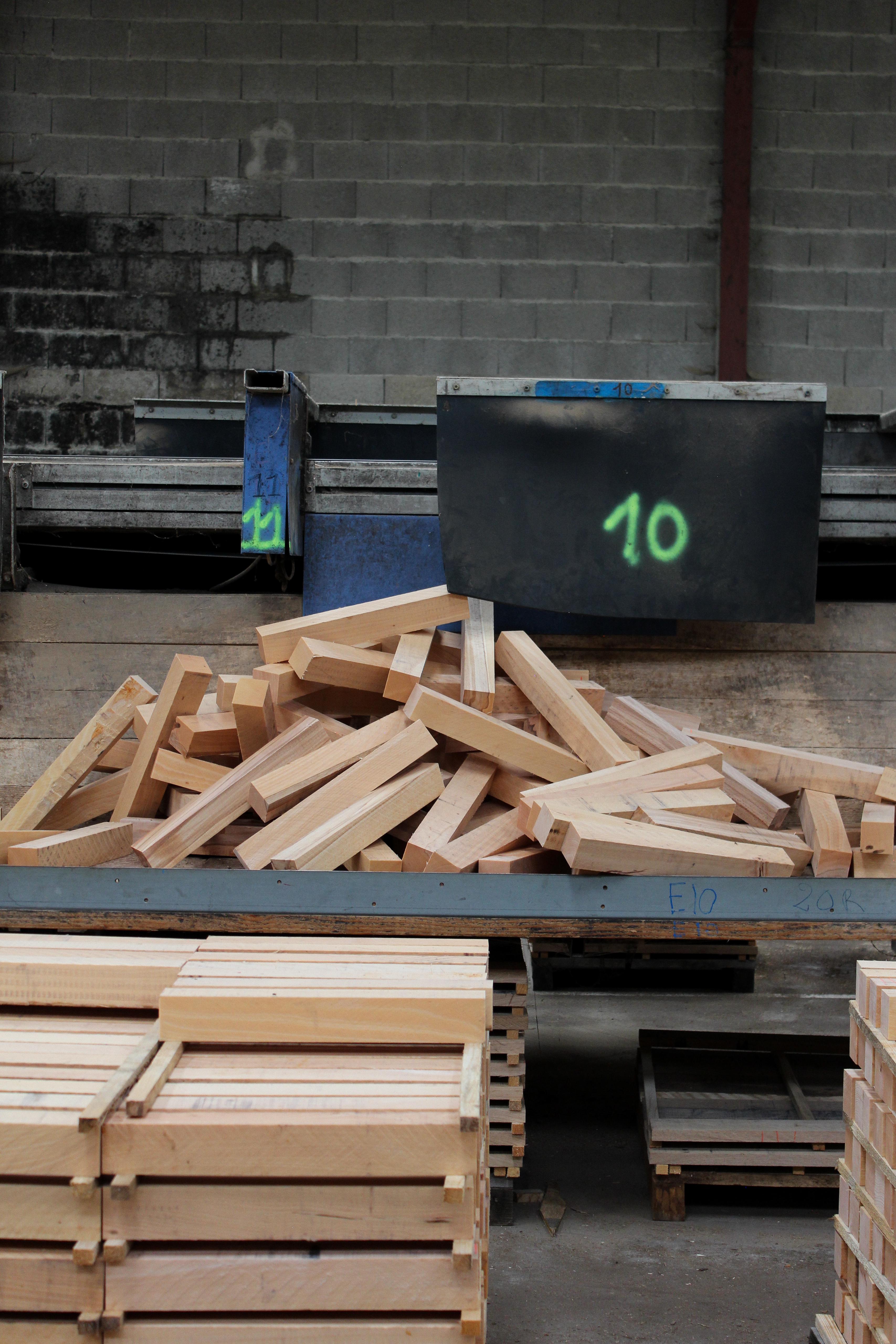
Felling beech trees (Fagus sylvatica) requires following specific rules based on the tree's physiology, climatic conditions, and the intended use of the wood. Widely used in cabinetry, carpentry, and as firewood, beech requires careful attention from the moment of felling to ensure optimal quality after drying.
Forestry data and professional practices agree on one essential point: beech must be felled during its dormant season.
This period generally runs:
At this time, sap flow is significantly reduced. This offers several technical advantages:
Conversely, felling during the sap-rising period (spring-summer) results in wood that is wetter, more prone to warping, and takes longer to stabilize.
Beech is a species that dries relatively quickly but remains sensitive to drying defects (cracks, cupping, warping).
Technical observations show that:
To limit defects, it is recommended:
The concept of felling "by the moon" is an ancient practice still used in some forestry regions.
It is based on the idea that lunar phases influence sap flow:
Some traditions also recommend specific periods in winter, when sap levels are at their lowest.
However, modern scientific studies do not show any direct, measurable effect of the moon on the mechanical properties or moisture content of wood. These practices are therefore based more on historically transmitted empirical knowledge than on verified technical rules.
Felling beech outside of its dormant period increases certain risks:
These effects are particularly visible in wood intended for joinery or cabinetmaking, where dimensional stability is essential.
Beech remains a highly sought-after species for its mechanical and aesthetic qualities:
However, its final quality depends heavily on adhering to the initial steps, starting with choosing the right time to cut and ensuring rigorous drying.
The optimal time to cut beech is in winter, during the dormant season, to ensure the wood is more stable, durable, and easier to process.
Lunar traditions persist in some practices, but wood performance relies primarily on technical criteria: season, weather conditions, speed of processing, and drying quality.
In our blog, you will find articles dedicated to the world of hardwood, to our know-how, to the life of the sawmill and to news in the sector.
De la forêt au produit scié, découvrez les métiers et les étapes qui permettent de transformer une grume en poutres, plots, dépareillés ou avivés, tout en valorisant les produits connexes issus du sciage.
Discover
À travers le label Bois de France, la Scierie VUITTON valorise l’origine française de ses bois, leur transformation sur le territoire et le savoir-faire d’une filière française tournée vers les marchés professionnels.
Discover
Découvrez ce que signifie la certification PEFC et comment la Scierie VUITTON s’inscrit dans une démarche de gestion durable des forêts, de traçabilité et de valorisation responsable du bois.
Discover


